
The official visit of the Minister of Awqaf and Religious Affairs of the Sultanate of Oman, Dr. Mohammed bin Saeed Al Mamari, to the Russian Federation marked a significant milestone in the development of bilateral relations. The distinguished guest's visit program, which included events in Moscow and Kazan, focused on strengthening dialogue on religious, humanitarian, and economic issues.
Talks were held in the Russian capital, laying the foundation for cooperation in the political and religious spheres. Minister Al Mamari met with Magomedsalam Magomedov, Deputy Chief of Staff of the Presidential Administration of the Russian Federation, underscoring the high level of the entire dialogue. Negotiations with Sheikh Ravil Gainutdin, the Chief Mufti of Russia, were then held at the Moscow Cathedral Mosque. The international exhibition "In the Name of Universal Values: Traditions of Mutual Understanding, Good-Neighborliness, and Peace in Oman" was also officially opened there. In the capital of Tatarstan, Dr. Al Mamari described it as "a humanitarian project that strengthens mutual respect and the exchange of best practices in peaceful coexistence between peoples."
In Kazan, the visit took on a more practical character, moving on to practical issues of cooperation. A lengthy meeting was held with Rustam Minnikhanov, the Rais of Tatarstan and Chairman of the Group of Strategic Vision “Russia - Islamic World”. The head of the republic noted the huge potential for cooperation, stating, "Trade turnover between Tatarstan and Oman is still insignificant, but the prospects for cooperation are enormous." As a concrete step, Minnikhanov invited the Omani side to participate in the annual International Economic Forum "Russia-Islamic World: KazanForum".
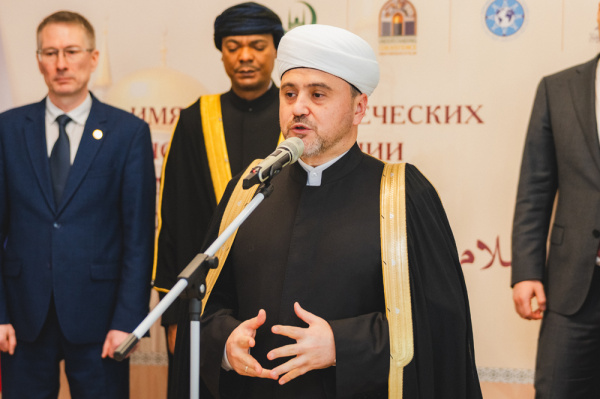
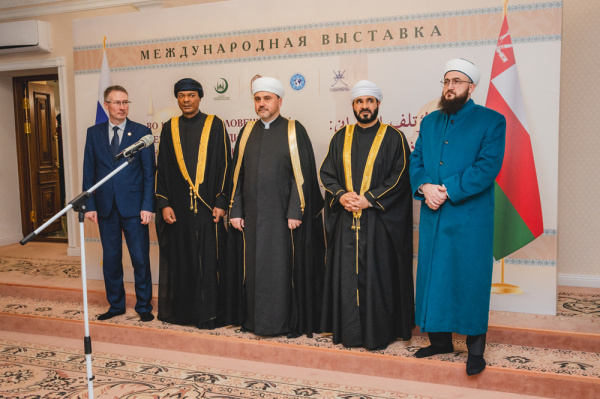
The grand opening of the Omani exhibition at the Al-Marjani Mosque in Kazan became a living symbol of shared values. Deputy Chairman of the Religious Board of Muslims of the Russian Federation for International Affairs, Mufti Rushan Hazrat Abbyasov, noted in his welcoming speech: "The exhibition clearly demonstrates what unites Muslims of Russia and the Muslims of the Sultanate of Oman – centuries-old good-neighborliness."
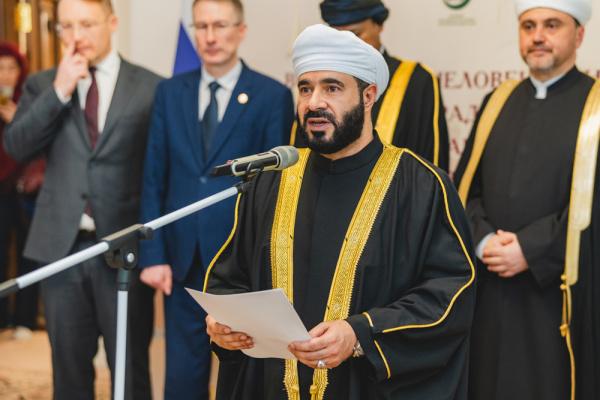
Dr. Al Mamari, addressing the guests, praised the host's role, stating, "Kazan is a shared memory for the entire Islamic world and a bridge between East and West." He emphasized that the city has, for centuries, set an example of how to "create strength from diversity."
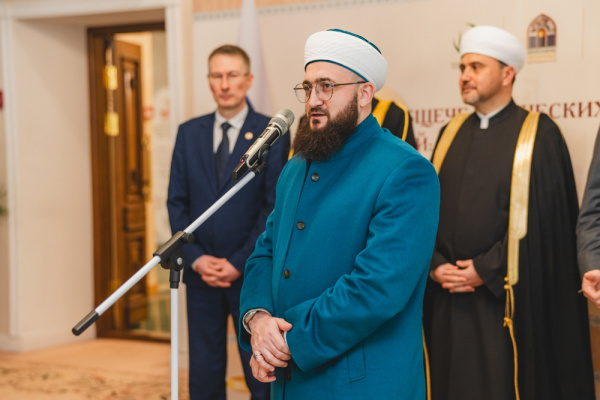
The Mufti of Tatarstan, Kamil Hazrat Samigullin, addressed the issue of preserving national identity. Emphasizing the importance of cultural dialogue, he quoted the Holy Quran, in which Allah explains the reason for the creation of different peoples and tribes on earth. "For what purpose have I created nations and tribes? Not that you should disappear, but that you should know one another," the mufti noted. Addressing the Omani representatives, the Mufti expressed admiration for their careful attitude toward their culture and traditions and thanked them for their visit, announcing a reciprocal move: “Expect our visit soon, especially since we have already been invited.”

The welcoming speech by Marat Gatin, assistant to the Rais of RT and deputy chairman of the Group of Strategic Vision “Russia - Islamic World”, imbued the exhibition's opening with historical depth and institutional strength. He recalled that "Oman occupies a special place in the spectrum of interaction between our great country and the Islamic world," and this year marks the 40th anniversary of the restoration of diplomatic relations. Gatin expressed confidence that the opening exhibition is "a separate contribution to the development of our ties, so that we can get to know each other better," and assured his Omani partners that "Russia and Tatarstan are open to our Omani friends."
Furthermore, it is important to note that the visit of the Omani Minister of Awqaf and Religious Affairs was discussed by Gatin during a meeting with the Minister of Foreign Affairs of the Sultanate of Oman, Badr bin Hamad Al-Busaidi. The meeting took place as part of the Tatarstan delegation's participation in the Russia-Oman International Business Forum.

An important element of the opening ceremony included speeches from representatives of diplomatic and cultural circles. Kazakhstan's Consul General in Kazan, Erlan Iskakov, emphasized the republic's special role, stating, "Today, Tatarstan is demonstrating its status as an international spiritual capital." Acting Director of the National Museum of the Republic of Tatarstan, Airat Faizrakhmanov, expressed admiration for Omani heritage and was struck by the manuscripts on display. He also announced the museum's readiness for further collaboration, assuring that "the National Museum of Tatarstan is ready to offer its halls for future exhibitions dedicated to Omani heritage."
As part of the extensive program, the distinguished guest learned about a number of social and educational projects, visiting the Yardam rehabilitation center, where he assessed the scale of charitable activities.
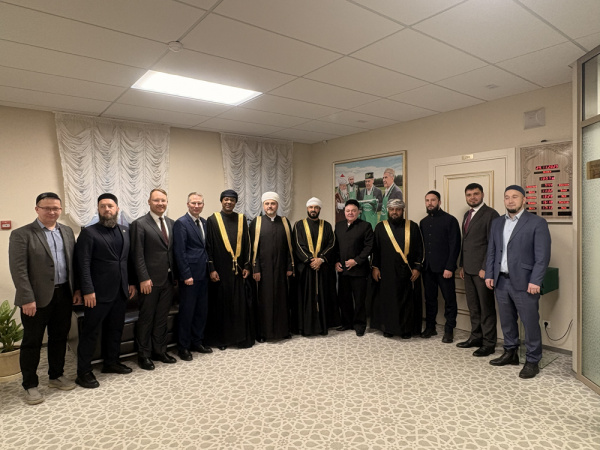
Meetings were also held with the leadership of leading Islamic educational centers — the Bolgar Islamic Academy (BIA) and the Russian Islamic Institute (RII), emphasizing the importance of the educational and scientific components in the activities of the Group of Strategic Vision. "This is the foundation for preserving identity, traditions, and spirituality," Marat Gatin emphasized during the meeting between the Omani delegation and the BIA leadership, thus noting the importance of developing multifaceted ties between Tatarstan and Oman.
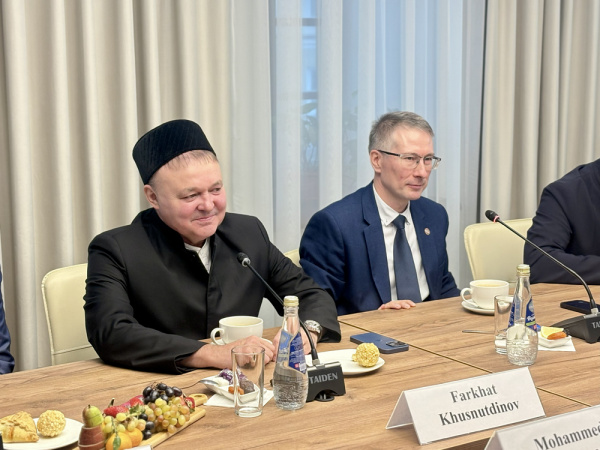
At the Kazan office of the BIA, the academy's rector, Farkhat Khusnutdinov, briefed guests on the institution's educational activities, explaining that during its existence, the academy has signed 48 agreements with religious educational institutions in various countries.

The Omani minister expressed gratitude for the hospitality and expressed interest in developing cooperation with the academy. "In this area, we can and must establish fruitful collaboration between your academy and our scientific and educational institutions," Al Mamari stated. He placed particular emphasis on the development of the institutions of awqaf and zakat, calling them "the same currency that can be used for the sustainable development of the country." The distinguished guest also addressed HSE students on this important topic during his stay in Moscow.
At the Russian Islamic Institute, the Omani delegation was met by the institution's rector, Rafik Mukhametshin. During the meeting, the parties discussed strengthening interreligious dialogue and cooperation between Islamic educational institutions in the two countries. Particular attention was paid to exchanging experience in training theologians and the unique model of Russian Islamic education, which combines in-depth study of classical Islamic sciences with secular disciplines and training in state-faith relations.
The visit marked a qualitatively new step in the development of relations. It went far beyond protocol events, encompassing specific economic projects, deep cultural exchange, theological dialogue, and social practices. This multifaceted approach significantly enriched the strategic partnership between Russia and the countries of the Islamic world, laying a solid foundation for future joint initiatives.
GSV "Russia - Islamic World"
Photo: RBM RT, BIA