
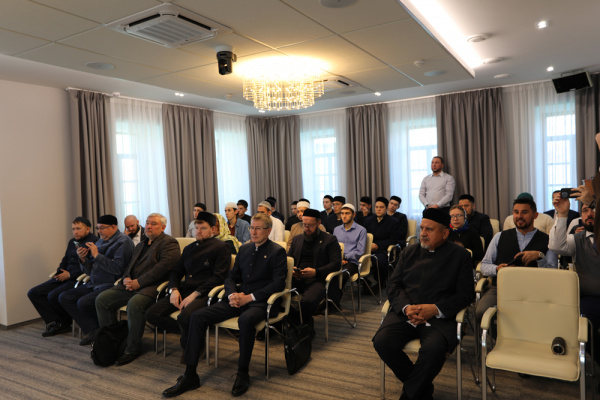
The Republic of Tatarstan has become a platform for dialogue between experts in Qur'anic and Islamic studies and a new generation of researchers. A roundtable discussion, organized by the Religious Board of Muslims of the Russian Federation (RBM RF), the Bolgar Islamic Academy (BIA), and the Qatar Ministry of Awqaf, was held on October 3 at the Academy's Kazan office. Its unique composition lay in its participants: the discussion included renowned scholars, students majoring in Qur'anic studies at Kazan Islamic University, students from the 1000th Anniversary of the adoption of Islam Madrasah, and students from the BIA Shakirda.
Welcoming the event's participants, Academy Rector Farkhat Khusnutdinov noted that the location for the roundtable was not chosen by chance.
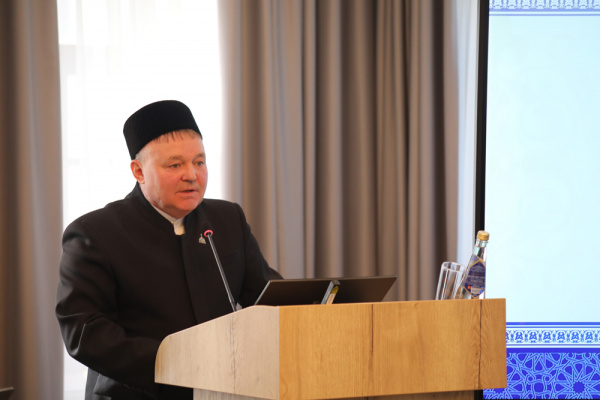
"Our Tatar theologian Shigabutdin Marjani worked, taught, and led the school in this building for many years," Khusnutdinov emphasized. The walls of this madrasah nurtured a whole host of figures who laid the foundation for the modern Islamic revival in Russia. Furthermore, the rector noted that "students diligently studying Quranic studies today will shape the face of our ummah in a few years."
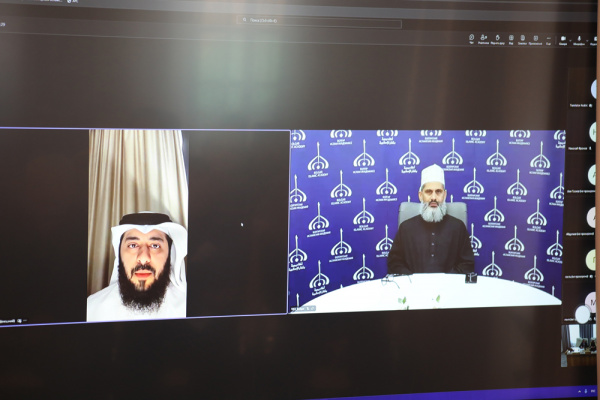
Khusnutdinov expressed gratitude to his international and Russian partners. In particular, he noted the support of Qatari Minister of Awqaf, Ghanem Al Ghanim. Words of appreciation were also extended to the RBM RF for co-organizing the event. The work of the RBM RF's Department of Culture, which implemented numerous significant projects in a short period of time, such as the international exhibition "World of the Quran", was particularly praised.
Rushan hazrat Abbyasov, Deputy Chairman of the RBM RF for International Affairs, welcomed the roundtable participants. He noted that the scientific meeting is being held during a special year for the entire Islamic world.
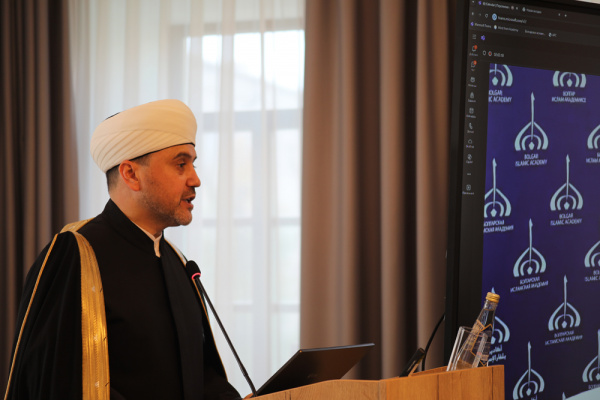
"We are celebrating the 1500th anniversary of the birth of the last prophet and messenger of Allah, Muhammadﷺ ," Abbyasov emphasized. He added that this provides an opportunity to reflect on how the mission of bringing the Word of Allah to the hearts of people continues.
“At the opening of the Moscow Cathedral Mosque (2015 – editor’s note), President Vladimir Putin, announcing the establishment of the Academy, asked us, Islamic clerics, to do everything necessary to revive domestic theological thought,” the mufti recalled.
Extensive work is currently underway in this area. Abbyasov expressed his appreciation for the diligence of the faculty and scholars of Russian Islamic universities. He also thanked the Qatari Ministry of Awqaf, noting the practical implementation of the partnership between Russian and Qatari organizations.
The mufti invited the roundtable participants to the grand opening of the "World of the Quran" exhibition, which this year spanned four regions of Russia. "The exhibition demonstrated that the Quran can be presented to people in a way that brings its light closer to everyone," Abbyasov stated, adding that interactivity and new technologies allow us to "perceive the sacred scripture with the heart."
Assistant to the Rais of Republic of Tatarstan, Deputy Chairman of the Group of Strategic Vision “Russia - Islamic World”, Marat Gatin, expanded on the theme of international partnership in his welcoming address to the participants.
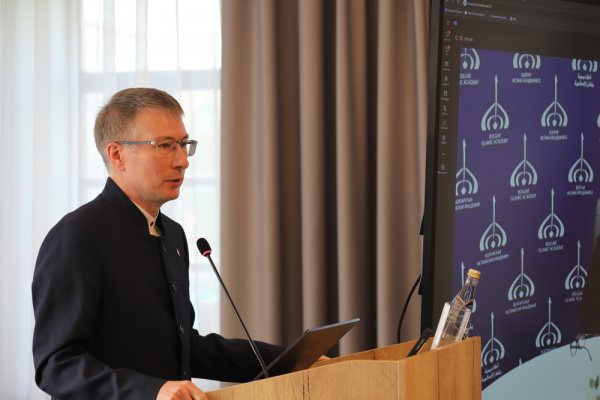
"As Rushan hazrat has already noted, a great deal of work is being done within the framework of Muslim universities, including the Academy. Important scientific events are being held, the educational process has been streamlined, and international ties are being strengthened," Gatin emphasized. The Deputy Chairman of the Group of Strategic Vision “Russia - Islamic World” (GSV) also expressed special gratitude to his Qatari colleagues.
"The GSV is ready to act as an assistant, as we can serve as a tool for implementing the projects and initiatives you propose," Gatin stated. He emphasized the role of the RBM RF in scaling up activities in various areas related to Islam and explained the position as an "assistant": "I have repeatedly noted that, at least in international cultural activities, the RBM RF, in my opinion, is a leader."
“We will continue to be happy to implement joint projects with you and work for the benefit of the country and the Muslim ummah,” Gatin expressed his readiness for cooperation.
A presentation by Rafik Mukhametshin, Chairman of the Council for Islamic Education, Rector of the Russian Islamic Institute, and Deputy Mufti of the Republic of Tatarstan for Education, marked the transition to the scientific portion of the roundtable. The topic of the presentation was "Quranic Studies in the Professional Muslim Education System in Russia: Problems and Prospects".
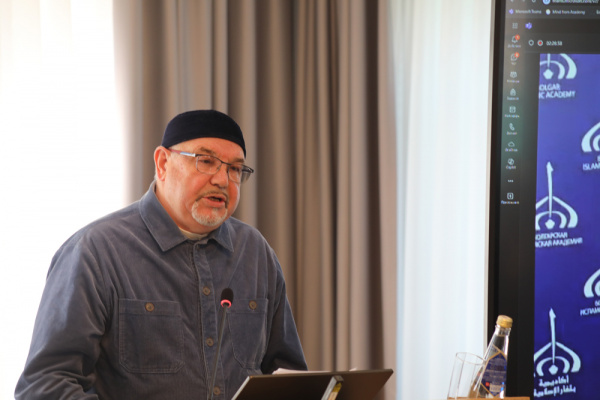
According to Mukhametshin, the fundamental problem of Russian Qur'anic studies stems from the legacy of the post-Perestroika "boom" in Qur'an translations. During that period, amateurish efforts like Valeria Porokhova's translation were accompanied by an unhealthy frenzy. As renowned scholar Yefim Rezvan characterized her work, it was "a synthesis of highly successful management and an extremely incompetent execution of a complex scholarly task." Although prominent orientalists subsequently joined the effort, a common scholarly approach to the criteria for translating and commenting on the Qur'an never emerged in Russia. As a result, despite all the variety of attempts, the working standard for most scholars still remains the academic translation of Ignatius Krachkovsky.
Contemporary research is fragmented and conducted in several centers—the St. Petersburg School of Oriental Studies, the Institute of Oriental Studies of the Russian Academy of Sciences, and the Institute of Asian and African Studies at Moscow State University. Despite significant works such as Rezvan's monograph "The Quran and Its World" and the methodological textbooks of Vladimir Lebedev, whose proficiency in Arabic is highly regarded by experts, the field lacks a unified methodology and coordination, and many projects, such as Anas Khalidov's translation into Tatar, remain unfinished or unpublished.
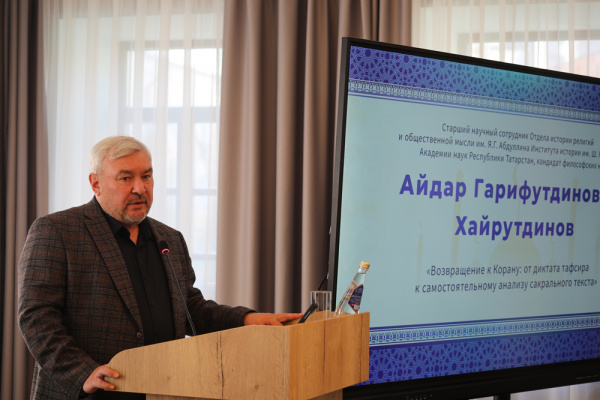
The roundtable also featured presentations covering a wide range of areas in modern Qur'anic studies. Participants touched on both fundamental research aspects — the history of Kazan editions of the Qur'an and their role in literary culture, as well as the influence of Qur'anic motifs on national literature — and current methodological issues, including the translation of specialized terminology and new approaches to interpreting sacred texts. This multifaceted approach demonstrated the depth and complexity of Qur'anic studies in contemporary Russian scholarly and theological scholarship.
GSV "Russia - Islamic World"
Photo in slider: Tariq Abro/Pixabay
Photo: BIA