
The III Youth Scientific Congress of the Organization of Islamic Cooperation (OIC) has opened in Kazan. Following a rigorous selection process, approximately 100 of the best young scientists from Russia and the Islamic world were given the opportunity to present their research.
The congress was organized by Kazan Federal University (KFU) and the Academy of Youth Diplomacy with the support of the Government of the Republic of Tatarstan, the OIC Standing Committee on Scientific and Technological Cooperation (COMSTECH) and the A.M. Gorchakov Public Diplomacy Fund.
At the ceremony, Deputy Minister of Science and Higher Education of the Russian Federation Dmitry Afanasyev addressed the participants with welcoming remarks. He noted that the forum reaffirms the importance of the youth scientific community as a key factor in sustainable development.
"The congress serves as an important platform for shaping a new generation of leaders," Afanasyev emphasized. He expressed confidence that the event will stimulate new discoveries that will contribute to solving contemporary problems and strengthening scientific dialogue.
Dmitry Tayursky, First Vice-Rector for Research at Kazan Federal University, noted that the connection to modern challenges can also be traced back to history: "It was in this hall (the Imperial Hall – editor's note) almost 200 years ago that the great Russian scientist, Rector of Kazan University, Nikolai Ivanovich Lobachevsky, delivered a significant speech on the education of the younger generation."
According to the Vice-Rector, this resonates with one of the objectives of the OIC's ten-year plan: "educating a thinking elite and fostering culture, science, and innovation." KFU was chosen for a reason, as it places a significant emphasis on youth science.
"We have over 150 scientific clubs and student societies at our university, and we are leaders in Russia," Tayursky emphasized.
On behalf of the Rais of Tatarstan Rustam Minnikhanov, Tatarstan Minister of Youth Affairs Azat Kadyrov welcomed the participants of the III Youth Scientific Congress. Addressing the young scientists, he noted, "Each of you is unique in your own way: with your ideas and your achievements." The minister thanked the participants for their work, emphasizing that science enables the world to move forward and improve people's quality of life. In the future, the leadership of Tatarstan intends to expand the opportunities for the implementation and realization of scientific developments.
Marat Gatin, assistant to the Rais of Tatarstan and deputy chairman of the Group of Strategic Vision “Russia - Islamic World” (GSV), emphasized the particular significance of the forum in his speech, calling KFU one of the best universities in Russia. The key message of his speech was the importance of not only professional dialogue but also establishing personal connections between participants.
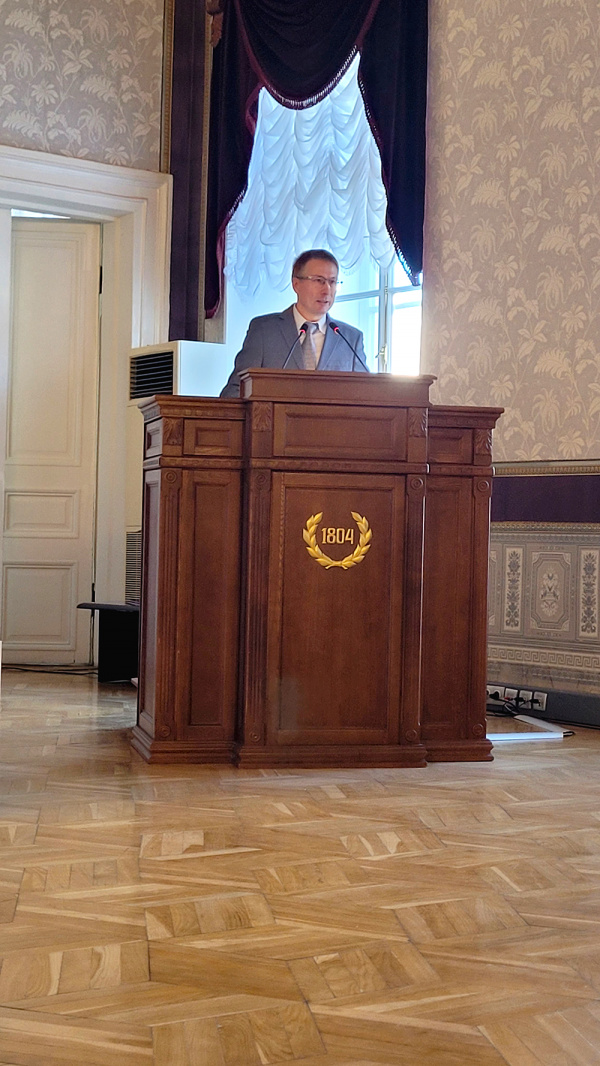
"It's important that you make new friends at the Youth Scientific Congress, maintain these contacts, and that they develop into strong friendships," Gatin emphasized. He expressed hope that the connections made will develop into joint projects that will be constructive for both Russia and the countries the participants represent.
Gatin also introduced the Group of Strategic Vision “Russia - Islamic World”, established in 2006 on behalf of the President of Russia Vladimir Putin to strengthen and expand bilateral relations. The Group hopes to become a full partner of the OIC Youth Scientific Congress in the future.
The Group currently includes 34 foreign members from 25 OIC countries and 44 representatives from Russia. Its activities are broad, including various forums and roundtables for specific project work. At the direction of Russian President Vladimir Putin, the Group is chaired by Rustam Minnikhanov, Rais of Tatarstan.
Countries in the Islamic world are actively building their scientific potential. The Youth Scientific Congress in Kazan has become an important platform for consolidating the scientific community, annually attracting hundreds of young scientists from dozens of countries. This collaboration contributes to the development of human capital and the strengthening of international scientific ties between Russia and the Islamic world.
This year, young scientists from Algeria, Azerbaijan, Bangladesh, Cameroon, the Republic of Chad, Egypt, Indonesia, Iran, Iraq, Jordan, Kazakhstan, Lebanon, Malaysia, Morocco, Nigeria, Pakistan, Palestine, Russia, Saudi Arabia, Syria, Sudan, Tajikistan, Turkmenistan, the United Arab Emirates, and Uzbekistan are participating in the congress.
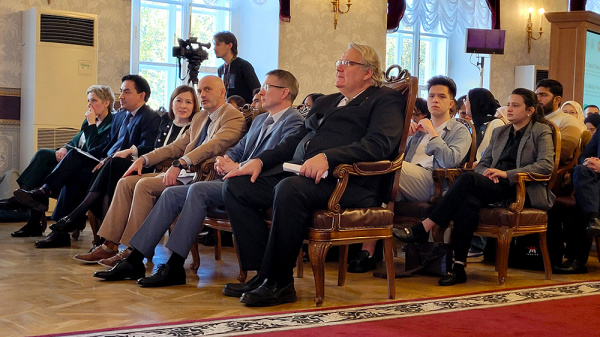
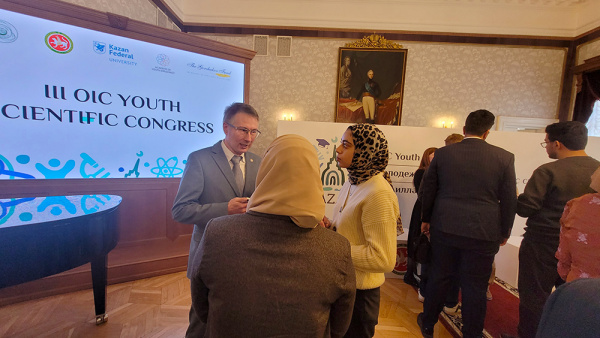
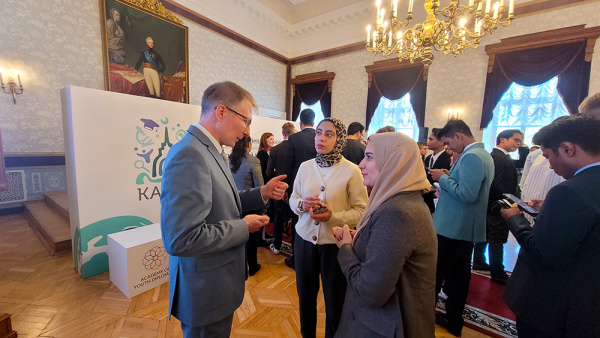
The main theme of the III Congress is achieving sustainable prosperity in the face of global challenges. Congress participants will focus their efforts on five key areas: education, biotechnology, art, international law, oil and gas technologies.
GSV "Russia - Islamic World"